Implementing effective service management practices is an important goal for organizations that want to deliver exceptional service and meet their customers’ expectations. FitSM®, a comprehensive service management framework, provides organizations with a structured approach to achieving service management excellence.
In this article, we will explore the key issues facing organizations and explain how FitSM addresses these issues by defining the basics, assigning roles, focusing on the team, conducting assessments, setting goals, defining policies, and conducting regular reviews. By following these steps, organizations can overcome common challenges and pave the way for a successful service management implementation.
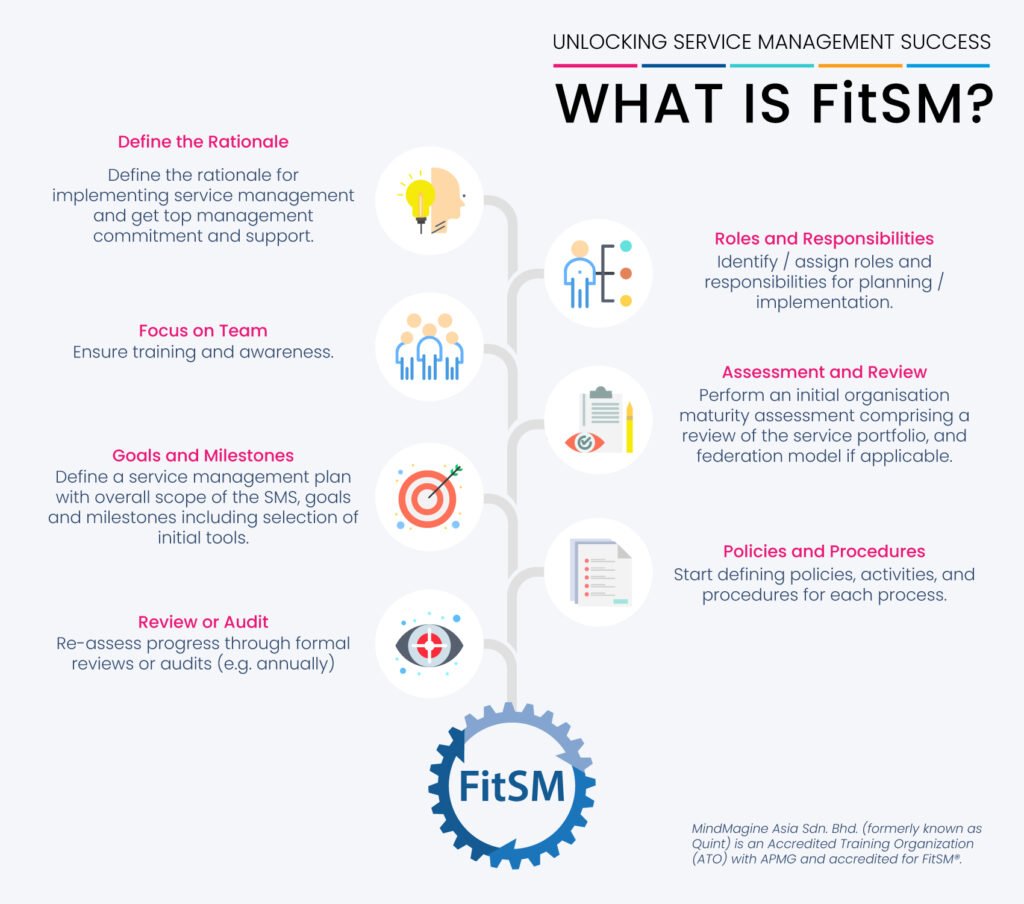
Implementing service management requires a clear understanding of the rationale behind it. By defining the rationale and benefits for adopting service management practices, organizations can gain the commitment and support of top management. This ensures that service management becomes a strategic priority and receives the resources and attention needed for successful implementation.
Assigning roles and responsibilities is crucial for effective planning and implementation. By clearly identifying the individuals or teams responsible for implementing service management, organizations can ensure accountability and streamline the process. This step helps create a common understanding of who is responsible for specific tasks and ensures smooth coordination and collaboration.
Building a capable and knowledgeable team is essential to a successful service management implementation. By training and creating awareness of service management principles and practices, organizations can equip their teams with the necessary skills and knowledge. This focus on the team ensures that all stakeholders are aware of service management goals and can effectively contribute to their achievement.
Conducting an initial organizational maturity assessment is a critical step in the FitSM implementation process. This assessment includes a review of the service portfolio and, if applicable, the federation model. By assessing the current state of service management practices, organizations can identify strengths, weaknesses, and areas for improvement. This assessment serves as the basis for measuring progress throughout the implementation process.
Defining a service management plan with clear goals, milestones, and the overall scope of the Service Management System (SMS) is essential. This plan provides a roadmap for the implementation process and ensures that organizations stay focused on their goals. It also includes selecting the initial tools and technologies that support effective service management practices.
Developing comprehensive policies, activities, and procedures for each service management process is critical for consistent implementation. By defining policies that guide decision making and establish a framework for action, organizations can establish a solid foundation. Documenting activities and procedures for each process ensures consistency, efficiency, and adherence to industry best practices.
Periodic review of progress through formal reviews or audits is essential to track the effectiveness of service management implementation. These reviews can be conducted annually or at specific intervals determined by the organization. Through these assessments, organizations can identify areas for improvement, validate the effectiveness of implemented processes, and make necessary adjustments to ensure continuous improvement.
Conclusion
Implementing FitSM provides organizations with a structured and comprehensive approach to service management implementation. By defining the rationale, assigning roles, focusing on the team, conducting assessments, setting goals, defining policies, and conducting regular reviews, organizations can overcome common challenges and achieve successful service management. FitSM serves as a guidance framework that enables organizations to optimize their service management practices and deliver exceptional service. Embrace FitSM as your partner on the journey to service management excellence, and see your organisation’s service delivery transformed.