
What is FitSM and how does it work
FitSM® is an internationally recognized framework that prioritizes simplicity, flexibility, and practicality in ITSM implementation. It draws from established standards like ISO/IEC 20000 and ITIL, providing a streamlined approach suitable for organizations of all sizes and industries. FitSM enables organizations to optimize their ITSM practices, ensuring efficient service delivery, management, and improvement.
What pain points does FitSM address
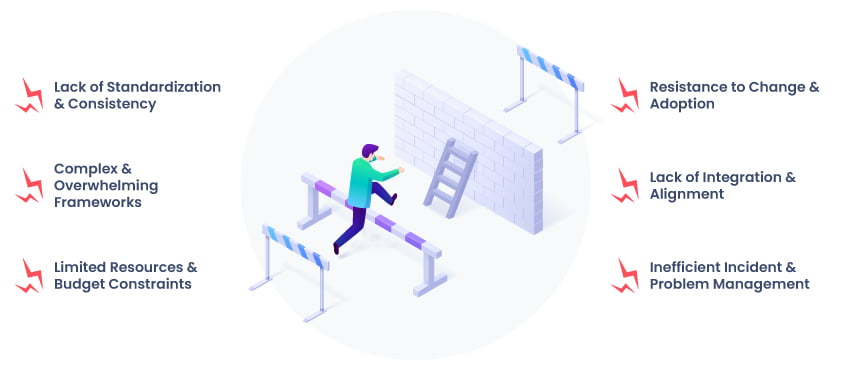
One of the pain points in ITSM is the absence of standardized processes and practices across teams and departments. This leads to inefficiencies, delays, and difficulties in collaboration. FitSM provides a consistent and structured approach to ITSM, ensuring that processes are standardized, well-documented, and repeatable.
Many organizations struggle with implementing complex and heavyweight ITSM frameworks, often finding them overwhelming and time-consuming. FitSM offers a lightweight alternative, focusing on essential processes and activities, making it easier to understand, implement, and maintain. It provides a practical approach without compromising on the quality of IT services.
Resource and budget limitations pose significant challenges for organizations aiming to improve their ITSM practices. FitSM recognizes this constraint and offers cost-effective solutions that can be tailored to the specific needs and resources of an organization. It allows organizations to prioritize and allocate resources efficiently, maximizing their impact.
Implementing any new framework or methodology requires change, and change can be met with resistance. FitSM takes a pragmatic approach, emphasizing the importance of change management and providing strategies to overcome resistance. By focusing on the benefits and demonstrating incremental improvements, FitSM helps organizations gain buy-in from stakeholders and encourage a culture of continuous improvement.
Silos and fragmented processes hinder collaboration and alignment between different teams and departments. FitSM promotes process integration and alignment, ensuring that all stakeholders work together towards common goals. It encourages cross-functional awareness and collaboration, breaking down barriers and fostering a cohesive ITSM ecosystem.
Timely resolution of incidents and problems is critical to minimizing service disruptions. FitSM provides guidelines and best practices for effective incident and problem management, enabling organizations to identify, prioritize, and resolve issues efficiently. This leads to reduced downtime, improved service quality, and increased customer satisfaction.
Why Take FitSM Course
To effectively leverage the benefits of FitSM and address the aforementioned pain points, organizations and IT professionals can consider taking FitSM courses. These courses offer comprehensive training and knowledge on FitSM’s principles, processes, and implementation guidelines. By obtaining FitSM certification, individuals can benefit in the following ways:
FitSM certification equips individuals with practical knowledge and skills to implement ITSM practices effectively. It provides a clear understanding of the FitSM framework, allowing professionals to apply its principles in real-world scenarios.
FitSM certification is globally recognized and demonstrates a solid understanding of ITSM best practices. Holding a FitSM certification enhances career prospects and credibility, opening doors to new opportunities and demonstrating a commitment to professional growth.
FitSM certification programs offer a cost-effective alternative to other ITSM certifications. They provide comprehensive training and practical guidance at a lower cost, making professional development accessible to individuals and organizations with limited budgets.
FitSM's flexibility enables professionals to adapt ITSM practices to diverse organizational needs. It caters to organizations of all sizes and industries, making it applicable to large enterprises as well as small and medium-sized businesses.
By pursuing FitSM certification, individuals and organizations can gain expertise in implementing ITSM practices effectively, enhance their professional standing, and benefit from the cost-effective and scalable nature of the FitSM framework.
Conclusion
FitSM offers a practical and effective solution to the pain points experienced in IT service management. By providing standardized processes, promoting collaboration, customer focus, and simplifying ITSM practices, FitSM enables organizations to overcome challenges, optimize their service delivery, and achieve better outcomes. Taking FitSM courses empowers individuals with the knowledge and skills to successfully implement and leverage the framework, leading to improved ITSM performance and business success.